Loading smiles...
Dental sealants are thin protective coatings placed in the grooves of back teeth (molars). They help keep food and bacteria out of areas that can be difficult for a toothbrush to reach and may be recommended as part of your child’s cavity-prevention plan.
Take a look at the top of a molar and you’ll notice it isn’t completely smooth. Back teeth have natural pits and grooves that help us chew, but those grooves can also trap bacteria and food.
A dental sealant is a thin protective layer placed in those grooves to “seal out” bacteria and food that would otherwise lead to cavities. Sealants do not replace brushing or regular dental visits. Think of as sealant as a little extra protection for a part of the tooth that can be harder to clean well.
Maybe — but not simply because they reached a certain birthday.
Sealants are often considered when permanent molars first come in. First permanent molars commonly erupt around age 6 and second permanent molars around age 12. The CDC notes that sealants are most effective when placed soon after those teeth erupt.
Our Pediatric Dentists also look at the individual tooth, the depth of the grooves, your child’s cavity history, home care, and overall risk before recommending treatment.
The process is usually straightforward.
The tooth is cleaned and kept dry. Sealant material is placed into the grooves and hardened so it forms a protective coating over the chewing surface.
The CDC describes sealant application as a quick process performed by dental professionals. Placing a sealant on an otherwise appropriate tooth does not require drilling into the tooth simply to add the sealant.
We explain what we’re doing in language that makes sense for your child.
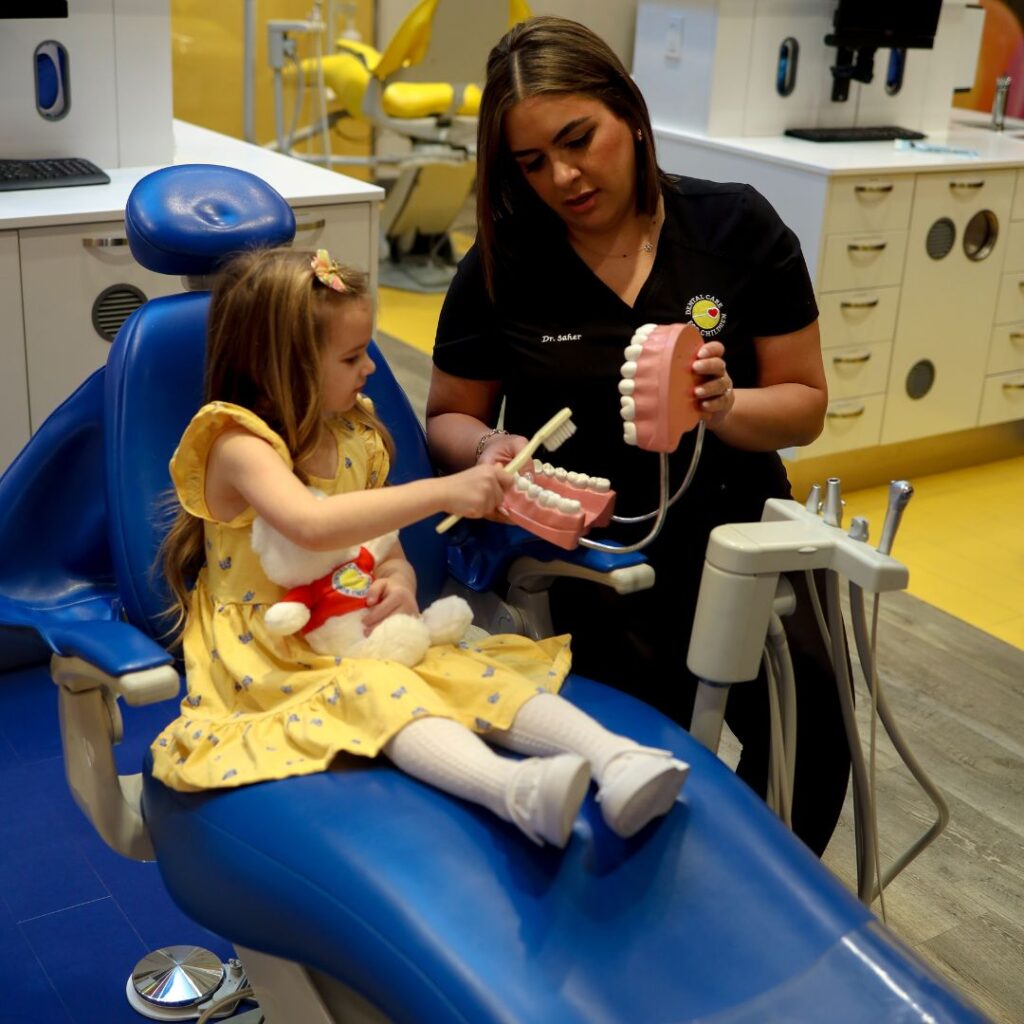
For some kids, that means showing them what will happen first. For others, it means keeping the explanation short and simple. If your child needs a little more time or reassurance, we can slow down.
A preventive treatment should still feel like care designed for the child receiving it.
No.
A sealed tooth still needs regular brushing, flossing, and dental checkups. During future visits, we’ll check the sealant along with the rest of your child’s teeth.
Sealants are one part of Preventive Care — not a substitute for it.
Any time your child’s back teeth are coming in is a reasonable time to ask.
If sealants would be helpful, we’ll explain why. If they are not needed, we’ll tell you that, too.

Dental Care for Children has earned over 1,000 five-star reviews from Calgary families, reflecting decades of trusted pediatric dental care.